• Skip to main content
  • Skip to primary sidebar
  • Skip to footer

Devine Concepts

Mobile Electronics Expert in Naples, Florida

  • Home
  • Services
    • Car Audio
    • Custom Installation
    • Driver Safety
    • Radar / Laser Detectors
  • About Us
    • Awards and Accolades
    • Meet the Team
    • Virtual Tour
  • Location
  • Contact Us
  • Facebook
  • Instagram
  • YouTube
  • Search

Car Audio

Product Spotlight: Morel Virtus Nano Carbon Integra 62

BestCarAudio.com - September 29, 2025

Virtus Nano Carbon Integra 62

One crucial factor when purchasing speakers for your car or truck is choosing a model that fits the available space. While it’s most evident that the diameter or outside dimensions need to suit the available space, the speaker depth is also crucial to creating the installation. When the available mounting depth makes it seem like a high-end upgrade is impossible, Morel has an answer – the Virtus Nano Carbon Integra 62. Let’s check them out!

Morel Virtus Nano Carbon Integra 62 Features

The key feature of these speakers is their diminutive mounting depth. Before we look at that, let’s explain what you get. The Virtus Nano Carbon Integra 62 is a set of 6.5-inch Integra 6 coaxial speakers that includes high-quality grilles and MXR 200.3 premium passive crossovers.

The key element is the woofer cone, with its unique woven carbon sandwich construction. Morel has implemented what it calls Grand Dome Geometry. The convex shape is a crucial part of the design, balancing impressive performance with a remarkably shallow mounting depth. The solution balances rigidity, mass, and damping to deliver exceptional performance.

Virtus Nano Carbon Integra 62
A key element in developing a shallow speaker is the Grand Dome Geometry of the carbon fiber woofer cone.

Specifications and Application Information

Morel rates the speakers as being able to handle 100 watts of power continuously, with peak power handling at 300 watts. The speakers have an efficiency rating of 87 dB SPL when measured with 2.83 volts at a distance of 1 meter from the microphone. Frequency response is specified at 50 Hz to 25 kHz.

With respect to electromechanical requirements, the Integra 62 woofer has an Fs of 73 Hertz, a Qts of 0.73 and a VAS value of 0.26 cubic feet. The effective cone area of the woofer is 17.98 square inches, and the maximum linear excursion is 0.12 (3 mm) inches in each direction. They are designed to work in infinite baffle applications like a car door, kick panel or rear parcel shelf. Should your application call for an enclosure, you’ll want about 0.6 cubic feet to keep the total system Q under 0.8. An ideal enclosure would be about 1.0 cubic foot per driver, resulting in an F3 frequency of 77.3 hertz and a Qtc of 0.765.

Virtus Nano Carbon Integra 62
Whether in an infinite baffle application or in an appropriately sized cabinet, the Integra 6 woofer provides a smooth frequency response.

Shallow Mounting Requirements

As you can see from the photos, the mounting requirements of the Integra 6 woofer are incredibly small. From the mounting surface, the woofer needs only 0.7 inches or 17 millimeters of depth. That’s right, the cone, voice coil, basket and motor will all fit within the confines of a piece of 3/4-inch thick MDF. Now, they do need airspace behind them to function correctly, but from a physical requirement, they are about as thin as a high-quality speaker can get.

What’s really cool is that Morel has patented the geometry of the speaker with respect to using a single neodymium magnet to power the woofer and the tweeter. The result is the thinnest car audio speaker on the market, and one that happens to sound excellent.

Virtus Nano Carbon Integra 62
Morel’s Virtus Nano Carbon Integra is the shallowest high-end 6.5-inch speaker in the industry.

The Integra Tweeter Design

You’ve likely noticed the integrated tweeter design that Morel calls Integra. In essence, this is a point source tweeter implementation that helps provide a smooth and predictable output both directly in front of the speaker, as well as off to the side.

The tweeter diaphragm itself is made from silk and features an Accuflex coating to help prevent resonances at extremely high frequencies. The tweeter has a relatively massive 1.125-inch (28 mm) voice coil and a resonant frequency of 1,000 Hz. This allows the system to be filtered at an impressively low 2.2 kHz with second-order slopes. Why is this impressive? Most 6.5-inch midrange speakers become quite directional above 2.5 kHz. So, when combined with the Integra tweeter design, these speakers will sound amazing from almost any listening position. When you have a speaker mounted low in the driver door or kick panel, these design criteria make a considerable difference in performance compared to most offerings on the market.

Premium Performance

The Integra 62 speakers aren’t just shallow; they are a high-end speaker in their own right. Morel uses a 2.16-inch aluminum voice coil former on the woofer with their Hexatech aluminum winding. The compact winding results in a nice low inductance value of 0.17 millihenries. This low inductance helps improve midrange performance. You can see the smooth output to 2.5 kHz in the frequency response graph above. The nominal impedance of the woofer is three ohms, so it will work with the amplifier built into a radio, while also maximizing the performance of external amplifiers.

Premium Passive Crossover

As mentioned, the Virtus Nano Carbon Integra 62 set includes premium passive crossover networks. The MXR 200.3 networks feature high-quality components like polyester capacitors and air-wound inductors. The tweeter output level can be adjusted in two steps from +2dB, 0dB or -2dB to compensate for personal listening preferences.

Virtus Nano Carbon Integra 62
The MXR 200.3 passive crossover network features premium components and includes tweeter output level adjustment.

An Upgrade That Fits Almost Anywhere

If you’re looking for high-end car audio speakers that fit almost anywhere, consider visiting an authorized Morel retailer in your area to audition the Virtus Nano Carbon Integra 62 set. Morel also offers a two-way component set with a similar woofer design and a three-way set with an equally shallow 2-inch midrange driver.

You can find an authorized Morel retailer near you using the Locator on their website. Be sure to check out Morel on Facebook, Instagram and YouTube to stay up to date with their impressive offerings.

This article is written and produced by the team at www.BestCarAudio.com. Reproduction or use of any kind is prohibited without the express written permission of 1sixty8 media.
Filed Under: ARTICLES, Car Audio, PRODUCTS, RESOURCE LIBRARY Tagged With: Morel

Product Spotlight: Hertz CP4.800

BestCarAudio.com - September 15, 2025

Hertz CP4.800

When choosing an amplifier for your car audio system, consider quality, features, physical size and power production to ensure a worthwhile investment. The mobile audio amplification experts at Hertz have recently released a new product line called Cento Power that specifically addresses these factors. In this spotlight, we’ll look at the four-channel CP4.800 amplifier.

Hertz CP4.800 Specifications

The Hertz CP4.800 is, as mentioned, a four-channel amplifier. The amp is rated to produce 110 watts of power when driving four 4-ohm speakers. That output increases to 190 watts per channel when driving four 2-ohm speakers. Hertz is generous with their configuration specifications. If one pair of channels is driving a set of four-ohm speakers and the other is bridged to a subwoofer, the mono channel can produce as much as 400 watts of power. If both pairs of channels are bridged to four-ohm speakers, the output is 380 watts each. All specifications are provided at 1% THD.

In terms of performance specifications, Hertz rates the amp as having a signal-to-noise ratio of 101 dBA when driven with 1 volt of input. Concerning harmonic distortion, the amp is rated at 0.02% when producing 100 hertz at 70% of rated power. While both numbers are quite good, keep in mind that the specifications aren’t compliant with ANSI/CTA-2006-D industry standards.

A key highlight of the Cento Power CP4.800 is that it qualifies as a true High-Resolution product with frequency response rated as 10 Hz to 48 kHz. If you are playing FLAC or WAV files through a high-resolution source unit, the extra bandwidth is a blessing.

Hertz CP4.800
The CP4.800 is impressively compact for its power output capabilities.

Amplifier Layout and Connections

The CP4.800 is based around a compact cast aluminum heatsink that’s 8.07 inches long, 6.1 inches wide and stands 1.89 inches tall. All the connections are made along the front edge of the amp, and the controls are concealed beneath a removable panel on the top of the chassis.

The amp has a two-position terminal block on the left end that will accept 4-AWG power and ground cables. Beside that is a 40-amp ATC fuse to protect the amp against reverse polarity power connections. From there, we have six Molex connectors. The first plug on the bottom has four RCA jacks on pigtails for the main low-level inputs. Two additional RCA output jacks can be used to feed another amp. The next two plugs have four positions and are the speaker-level inputs to the amp. The RCA inputs can accept an input range of 320 millivolts to 8 volts. The speaker-level inputs will take 1.6 to 40 volts RMS.

Above the RCA inputs is a two-position jack for the remote turn-on input and output. Besides that, there is another two-position jack for the remote volume control. The optional HRC-02 control allows you to adjust the output of the rear channels to fine-tune the system when the low-pass filter is active.

The last plug is a larger-gauge eight-position jack for the speaker output wires.

Hertz CP4.800
All signal and speaker connections are made via Molex-style connectors to keep the installation clean and tidy.
Hertz CP4.800
Power and ground connections are handled by a large terminal block.

Signal Processing and Adjustments

As mentioned, all the adjustments and controls are located on the top of the amp under a removable cover. Starting on the top left, there is a switch for the Automatic Remote Turn-on (ART) feature. When enabled, the amp should turn on when the factory source unit connected to the speaker-level inputs is activated. Below that is a button to select the source for the rear channels. They can be fed from the front inputs in a two-channel system or the rear inputs for complete system control from the source unit.

Each pair of channels has a level/gain control, a crossover function switch and a crossover frequency adjustment control. The crossover function switch selects between high-, low-pass, or full-range operation. The crossovers have second-order 12 dB/octave filtering that’s adjustable between 50 Hz and 4 kHz.

The rear channels include a bass boost control that can add up to 9 dB around 50 Hz. Finally, each pair of channels has a mono input selector. With both enabled, the amp could be used as a two-channel unit where the Left RCA feeds both front channels and the Left RCA on the rear input feeds both rear channels. The mono button is also helpful if your radio has only a single subwoofer output jack.

Hertz CP4.800
The CP4.800 looks tidy with the panel covering the top-mounting controls and adjustments.

Upgrade Your Car Audio System with the Hertz CP4.800

If you are looking for a compact, high-power amplifier with good system application flexibility, drop by a local authorized Hertz car audio retailer and ask about the new Cento Power Series CP4.800. You can find an authorized retailer near you using the locator tool on their website.

Be sure to follow Hertz on Facebook, Instagram and YouTube for information on all their latest product releases and events the team attends.

This article is written and produced by the team at www.BestCarAudio.com. Reproduction or use of any kind is prohibited without the express written permission of 1sixty8 media.

Filed Under: ARTICLES, Car Audio, PRODUCTS, RESOURCE LIBRARY Tagged With: Hertz

Product Spotlight: Pioneer DMH-W3050NEX

BestCarAudio.com - September 1, 2025

Pioneer DMH-W3050NEX

Pioneer and car audio go together like coffee and cream or a hot dog with ketchup — classic pairings that make sense. On that note, we are going to take a look at one of their NEX-Series double-DIN multimedia receivers in this spotlight. Let’s check out the DMH-W3050NEX.

Pioneer DMH-W3050NEX Platform

For most of us, describing a multimedia receiver as a double-DIN solution would tell us all we need to know. The DMH-W3050NEX is somewhat unique in that the radio’s chassis is single-DIN, while only the front panel shares the standard 4-inch by 7-inch dimensions. This allows the radio to work with many dash kits that won’t accept a radio with a four-inch-tall chassis. Right out of the gate, you’ve got enhanced compatibility in terms of vehicles this works with.

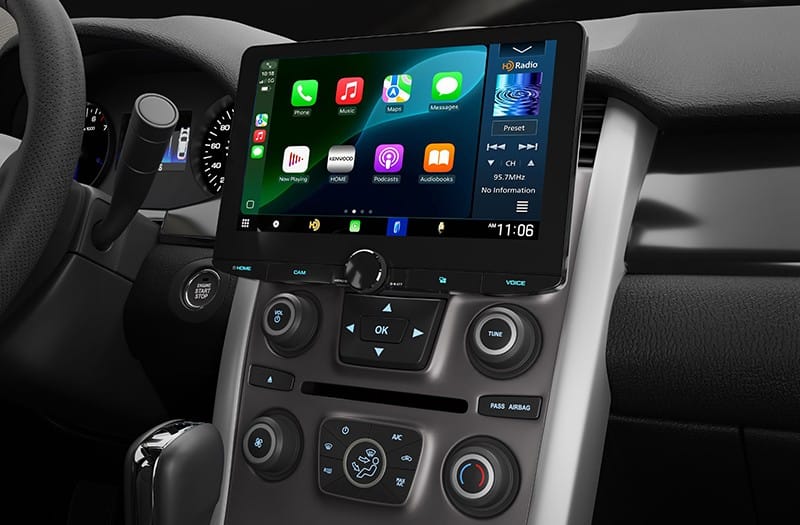
The radio features a 6.8-inch (measured diagonally) capacitive touch front panel with a WVGA 800 x 480-pixel color display behind it. There are six capacitive-touch buttons on the left side of the screen, providing access to menus, voice recognition and volume control.

Communication and Entertainment Options

Every top-quality multimedia receiver, such as the DMH-W3050NEX, includes Android Auto and Apple CarPlay smartphone connectivity. In this case, both platforms feature wireless connectivity, thanks to integrated Wi-Fi. There’s no better way to communicate with family, friends and co-workers; choose the entertainment you want, or get detailed turn-by-turn navigation instructions to almost any location in North America.

The radio includes an HD Radio receiver for FM radio. HD Radio not only improves audio quality on compatible stations, but provides access to additional programming on the digitally broadcast channels. For example, you might have a high-resolution music stream on 97.3, then a non-stop news broadcast on HD2 and sports on HD3, all transmitted on the single 97.3 carrier frequency. Best of all, HD Radio doesn’t require a subscription – it’s completely free. The FM tuner also includes RDS decoding.

The DMH-W3050NEX has a USB port on the rear of the chassis that will charge your phone with up to 1.5 amps of current. You can also connect a USB memory stick (or other Mass Storage Class device) to play WMA, MP3, WAV, AAC or FLAC audio files. When parked, you can also play AVI, DivX, MKV, H.264, H.265, MPG, and several other video file formats. Impressively, the deck supports full HD 1920×1080 resolution video files – something not all multimedia receivers can do.

The radio features a Bluetooth 5.3 transceiver, allowing you to stream audio from a portable media player and select tracks using the ACRVP profile. Speaking of connecting smart devices, the radio works with Pioneer’s Weblink app on your smartphone. You can stream video from a source like YouTube directly to the radio.

Your installer can upgrade the radio with a SiriusXM satellite radio receiver. With SiriusXM, you can enjoy genre-specific entertainment almost anywhere in North America.

Pioneer DMH-W3050NEX
The shallow L-shaped chassis simplifies the installation process and allows the DMH-W3050NEX to integrate into vehicles where a full double-DIN radio won’t fit.

Sound Quality and Signal Processing

The Pioneer DMH-W3050NEX is high-res audio certified, and it will decode digital audio files with sample rates up to 192 kHz. The deck includes a built-in amplifier rated to produce 14 watts of power in compliance with the ANSI/CTA-2006 standard. The front, rear and subwoofer preamp outputs will deliver up to four volts.

In terms of audio processing, the DMH-W3050NEX comes equipped with a 13-band graphic equalizer, adjustable slope and frequency crossovers and signal delays. In standard mode, the radio provides front, rear and subwoofer outputs. In Network mode, the outputs are configured for low, midrange and high-frequency output signals.

The radio is compatible with the iDatalink Maestro RR and RR2 radio integration module. Depending on your vehicle, this interface allows the radio to communicate with the CAN network in your car, truck or SUV. You can see climate controls, dashboard gauges, tire pressure, battery voltage, and even vehicle diagnostic code information. If your vehicle isn’t compatible with the Maestro RR or RR2, your installer can likely connect to the steering wheel buttons using an interface like the Maestro SW.

Pioneer DMH-W3050NEX
The Pioneer DMH-W3050NEX boasts wireless connectivity for Apple CarPlay and Android Auto.

The Heart of a Premium Sound System

If you’re shopping for a well-equipped, high-performance multimedia receiver to upgrade your vehicle, visit a local authorized Pioneer dealer and ask about the DMH-W3050NEX. You can find an authorized retailer near you by clicking the “Find a Store” link from anywhere on the Pioneer website.

For more information on Pioneer source units, speakers, amplifiers, subwoofers and dashcams, follow them on Facebook, Instagram and, of course, YouTube.

This article is written and produced by the team at www.BestCarAudio.com. Reproduction or use of any kind is prohibited without the express written permission of 1sixty8 media.
Filed Under: ARTICLES, Car Audio, PRODUCTS, RESOURCE LIBRARY Tagged With: Pioneer

Product Spotlight: KICKER LX1200.5

BestCarAudio.com - July 11, 2025

ICKER LX1200.5

If you’ve been paying attention, then you’ll know that DSP-equipped car audio amplifiers are pretty common these days. KICKER introduced a new series of amplifiers called LX. These beasts are not only packed with serious power production capabilities, but they include digital signal processing and a unique configuration solution that separates them from everything else on the market. We’ll focus on the five-channel LX1200.5 in this Product Spotlight.

What is the KICKER LX1200.5 Amplifier?

The KICKER LX1200.5 is a five-channel amp with an integrated digital signal processor. The amp is based on a cast aluminum chassis that measures 12.625 inches in length, 8.875 inches in width and stands 2.375 inches tall. All the connections are hidden under a removable panel along the long edge of the amp. The panel is held in place with magnets for a clean and tidy appearance. Wire connections are made via terminal blocks with heavy-duty set screws. Interestingly, there are only three controls on the amp, which are gains for the subwoofer, AMP1 and AMP2 channels.

Power-wise, KICKER rates the output of AMP1 and AMP2 at 125 watts per channel into four-ohm loads and 175 watts per channel when driving two-ohm loads. The channel pairs can be bridged to provide 350 watts into a single four-ohm load. The subwoofer channel produces 300 watts into a four-ohm load, 550 watts into two ohms and an impressive 700 watts when driving a one-ohm load. All specifications include the 14.4-volt, less than 1% THD+N qualifications, so you know they are comparable to other quality brands. The amplifier’s signal-to-noise ratio is greater than 75 dB, referencing one watt of output into a four-ohm load.

ICKER LX1200.5
To keep the installation tidy, signal, speaker and power connections are all made along one side of the amp.

OEM Audio Integration

The KICKER team knows that many amplifier installations in modern vehicles use factory-installed source units. This means the amplifiers need to accept speaker-level signals. The LX1200.5, like other models in the LX Series includes fully differential speaker inputs that can take up to 40 volts of signal without needing an external interface. In low-level mode, the preamp inputs accept up to 5 volts.

The amplifier also has two turn-on modes. The amp can be activated with the typical 12-volt signal from an aftermarket source unit or switched to DC offset detection to monitor the speaker wires for a voltage from a factory radio. KICKER calls this their FIT+ technology.

Speaking of integration, the LX amplifiers have input gain matching LEDs that illuminate when you have reached the maximum output capabilities of the amplifier.

Integrated Digital Signal Processing

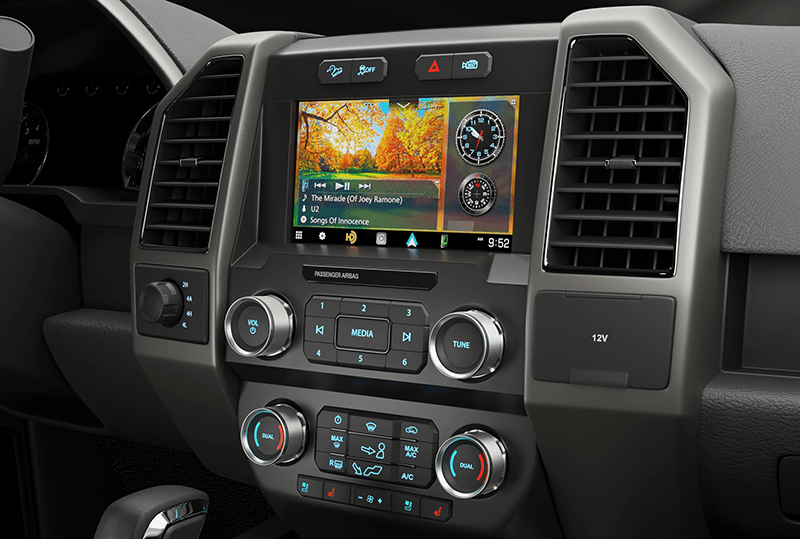
Unlike most DSP-equipped amplifiers on the market that require a laptop or tablet to set up, KICKER includes a controller with the amp called the LX Control Center. This compact controller features a two-line LCD screen, four rotary encoders and buttons to access different amp channels and functions.

ICKER LX1200.5
Each amplifier includes an LX Control Center (LXCC) to let your installer configure the amp quickly and easily.

In terms of signal processing, your installer can apply high-pass, low-pass or band-pass crossover to each of the three channels on the amp. The high-pass filters are adjustable from 20 Hz to 5 kHz and the low-pass from 40 Hz to 5 kHz. Slopes can be set to 12 or 24 dB Linkwitz-Riley alignments or 12, 18 or 24 dB/octave Butterworth. You’ll want to use the Linkwitz alignment so you can set the crossover points at the same frequencies. The subwoofer channel low-pass filter is adjustable from 20 to 160 hertz and there is an infrasonic filter that can be set from 10 to 80 Hz to control subwoofer cone excursion.

KICKER includes a signal delay for the left channels on both AMP1 and AMP2. Your installer can delay the output of the left channels, which correlate to the speakers closest to the listening position in 0.1 millisecond steps, up to a maximum of 10 milliseconds. When set properly, adding delays to the closer speakers can help improve imaging and staging.

The subwoofer channel has a parametric equalizer that can be set between 20 and 80 hertz with a Q factor between 1 and 5 and a maximum gain of 6 dB. If you want to add a little Kick, no pun intended, this is the perfect solution. The LX amps also include SHOCwave 2.0. This feature analyzes audio information and creates a harmonic one octave below the fundamental to restore audio information lost by many factory-installed amplifiers. If you want to rumble, SHOCwave 2.0 can do it!

Once your installer is done setting up the amp, the LXCC (LX Control Center) can be disconnected from the RJ45 port, and the included LX Remote Control (LXRC) can be plugged in. This multifunction remote controls the subwoofer level and SHOCwave 2.0 functionality and even shows battery voltage using the LEDs around the perimeter.

ICKER LX1200.5
The included LX Remote Control (LXRC) is much more than just subwoofer level control.

Full Amplifier Family

The new LX series from KICKER includes the LX1200.5 five-channel we’ve discussed, a seven-channel LX1300.7 and the monster LX3000.1 3000-watt monoblock in the same chassis size. The LX series includes a four-channel LX500.4 and LX850.1, LX1250.1 and LX1300.7 in a smaller 9.625-inch long chassis. The width and height of all the amps are the same, so mixing and matching models is easy.

Speaking of design flexibility, the little illuminated badge in the center of the amp can be rotated 180 degrees to align with however your installer configures the amps in your vehicle.

Upgrade Your Car Audio Experience with KICKER LX-Series Amplifiers

If you are shopping for an impressively featured, high-performance amplifier for your car audio system, drop by a local authorized KICKER retailer and ask about the new LX series models, like the LX1200.5. They can design a system around these products, integrate it into your vehicle and configure it to sound amazing.

You can find an authorized retailer using the locator tool on the KICKER website. Be sure to follow the KICKER on Facebook, Instagram and YouTube. Check out the KICKER Unmasked LIVE show for weekly updates on new products and their unique technologies.

This article is written and produced by the team at www.BestCarAudio.com. Reproduction or use of any kind is prohibited without the express written permission of 1sixty8 media.
Filed Under: RESOURCE LIBRARY, ARTICLES, Car Audio, PRODUCTS Tagged With: KICKER

Will Upgrading My Speakers Make My Stereo Sound Better?

BestCarAudio.com - June 1, 2025

Upgrading My SpeakersWhen it comes to reproducing an audio signal, your speakers are the most important component in the food chain. You could have the best source unit and amplifiers known to man, but if your speakers are mediocre, then the listening experience will suffer. That said, the world of car audio has changed over the years. With all of the changes in new cars lately, a question that often comes up is “Will upgrading my speakers make my stereo sound better?”.

Factory Audio Complexities

Upgrading My Speakers
Factory speakers are built to fit a budget.

Spurred by the efforts of companies like Harman and Bose, factory audio systems sound better than ever. Does that mean they sound great? Not necessarily. OEM audio systems have amazing technologies and elaborate tuning, but they are often missing a crucial component – excellent speakers. Why go to all that trouble and not use the best speakers possible? In most cases, the answer is cost. Building an inexpensive speaker may cost $20 or $30. Building one that is “really good” can cost more than 10 times as much, and it goes up from there. These prices don’t include packaging, shipping, marketing, training or warranty costs. When you consider that most cars with premium sound systems have somewhere between 12 and 20 speakers, with a few having more than 30, implementing truly excellent speakers would have a dramatic effect on the final cost of the vehicle.

How About Just Upgrading My Speakers?

Upgrading My SpeakersIf you had a high-end, two-channel home audio system, upgrading your speakers would be one of the easiest ways to improve the clarity, detail and accuracy of your audio system. If you have a simple stereo system in your car, the same philosophy holds true.

There is a problem, though. More and more factory audio systems, even systems without elaborate amplifiers, include signal processing to make the inexpensive speakers they use sound better. Let’s look at an example.

Chrysler is well known for its use of a woofer in the front door of its vehicles and a small midrange driver on the dash. In most applications, this midrange driver has no tweeter. The amplifier in the car or truck is tuned to increase the high-frequency information sent to that speaker. The result is that you hear high-frequency content in a relatively good balance with the midrange information.

Let’s say we upgrade those dash speakers with a good quality midrange speaker with a coaxial tweeter. The high-frequency signal boost from the amplifier or source unit now results in far too much treble information in the system. Yes, we upgraded the speakers, but now the system sounds worse. In fact, it may be unlistenable.

The same issue exists with any speaker we want to upgrade. Adding a subwoofer, better door speakers or new speakers in the back of the car can all result in a system that doesn’t sound as good as the factory system. Every speaker has different efficiencies, frequency response characteristics and frequency limits. Assuming you can swap one for another will lead to problems.

How Do We Upgrade Our Sound Systems?

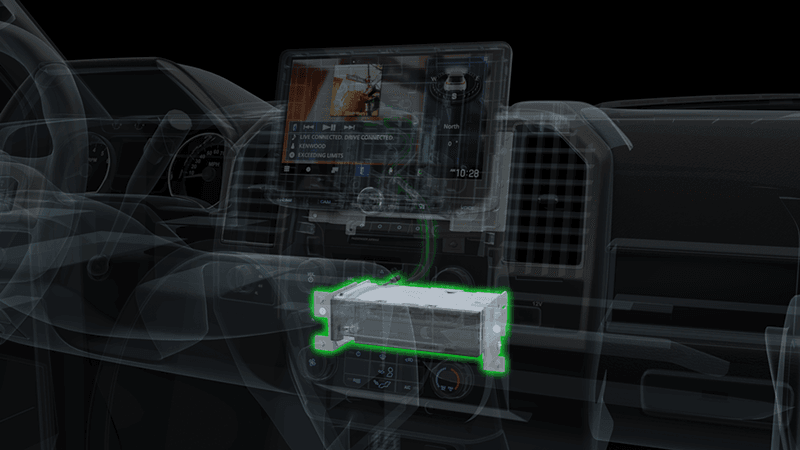
Upgrading My SpeakersWithout getting into the complexities of sound systems with upmixers and other elaborate processing, the simplest method of upgrading is to include a digital signal processor and amplifier into the system. Here’s how this works.

Your mobile electronics retailer will install a digital signal processor, a new amplifier and your new speakers. He or she can then measure the output of each new speaker using a real-time analyzer and adjust the processor it so that it produces smooth and natural frequency response. The process should take just an hour or two, but it results in a significant improvement how the system sounds. Proper tuning is as important as the choice of speakers and their installation.

With most DSP units on the market, the tuning process can improve the frequency response of the system – and where the sound comes from. Ensuring that both left and right speakers sound the same at the listening position is crucial to creating the feeling that your music is coming from a soundstage right in front of you.

It’s Not Just Your Stereo

Upgrading My SpeakersYour speakers are not the only part of your vehicle that has become more complicated to upgrade. Decades ago, a set of headers and a large diameter, free-flowing exhaust could unleash a noticeable increase in performance. Your mechanic could fine-tune a carburetor to increase engine performance based on the efficiency improvements you chose.

With modern computer-controlled engine management systems, you can’t change anything. If you decide to modify the intake or exhaust, the computer may not like the changes and turn on a Check Engine light. The solution? A programmer can be purchased to recalibrate the engine management system for the modifications you have made. Do you see the parallels?

Upgrade for Better Sound

The answer to the question of whether upgrading your speakers will make your stereo sound better is a resounding yes. But the overall system design needs to be taken into consideration for the upgrade to be successful.

If you’re on the fence about upgrading your audio system, drop into your local mobile electronics retailer and listen to their demo vehicle or a set of high-end speakers on their display board. Ask if they can demonstrate how digital signal processing can improve the performance of a mobile sound system. Once you’ve heard how amazing a well-installed and properly tuned car stereo can sound, we think you’ll be hooked.

This article is written and produced by the team at www.BestCarAudio.com. Reproduction or use of any kind is prohibited without the express written permission of 1sixty8 media.
Filed Under: ARTICLES, Car Audio, RESOURCE LIBRARY

  • « Go to Previous Page
  • Page 1
  • Page 2
  • Page 3
  • Page 4
  • Interim pages omitted …
  • Page 22
  • Go to Next Page »

Primary Sidebar

About Us

About Us

Devine Concepts is a mobile electronics retailer based in Naples, Florida. We are led by Adam Devine, a 20-year veteran in the industry and a Mobile Electronics Association top 50 … [Read More...]

Take a Tour of Our Facility

virtual tour

We invite you to tour our facility virtually. We hope you love what you see. (It’s even better in person!)

Car Audio

Car Audio

Devine Concepts in Naples, Florida, specializes in car audio. While some shops offer this as one of their services, it is the main focus in our facility. In fact, our owner Adam … [Read More...]

Radar / Laser Detectors

Radar / Laser Detectors

One of the specialties at Devine Concepts in Naples, Florida, is laser and radar detectors. We offer both portable and custom-installed solutions to our clients. It is our opinion … [Read More...]

Custom Installation

Custom Installation

Custom Installation

Devine Concepts in Naples, Florida, was founded in 2018 by Adam Devine, an MECP Master Installer with more than 20 years of experience,  and one of the most-awarded mobile … [Read More...]

Footer

Location


Get Directions to Devine Concepts

Address

Devine Concepts

14848 Old 41 Rd Suite 9
Naples, FL 34110
(239) 451-3210

Services

  • Car Audio
  • Custom Installation
  • Driver Safety
  • Radar / Laser Detectors

Connect with Us

  • Facebook
  • Instagram
  • YouTube

Store Hours

Monday, Tuesday, Wednesday, Thursday, Friday9:00 am – 5:00 pm

Copyright © 2025 Devine Concepts · Privacy Policy · Website by 1sixty8 media, inc. · Log in