• Skip to main content
  • Skip to primary sidebar
  • Skip to footer

Devine Concepts

Mobile Electronics Expert in Naples, Florida

  • Home
  • Services
    • Car Audio
    • Custom Installation
    • Driver Safety
    • Radar / Laser Detectors
  • About Us
    • Awards and Accolades
    • Meet the Team
    • Virtual Tour
  • Location
  • Contact Us
  • Facebook
  • Instagram
  • YouTube
  • Search

Car Audio

Fuses: To Serve and Protect!

BestCarAudio.com - November 5, 2023

FusesLet’s face it: Accidents happen. Minimizing the collateral damage from an accident is important. When you have a mobile electronics system that includes installing an amplifier in your vehicle, a discussion about fuses or circuit protection should take place before the installation begins. Choosing the right device to ensure your system works as intended and is safe in the event something goes wrong is very important. Let’s talk about fuses.

What is a Fuse?

A fuse is a device that will disconnect a circuit when too much current passes through it. Fuses typically incorporate a small piece of metal with a specific amount of resistance. As current passes through the fuse, the piece of metal heats up. Up to a certain temperature, the circuit remains functional. If the current level increases, the fuse heats up more and will eventually fail, which protects the power source and load.

My Wire Needs a Fuse?

FusesTwo common locations in our audio systems need protection. Any power connection to the battery needs a fuse. Any electronic device connected to the vehicle electrical system should also have a fuse.

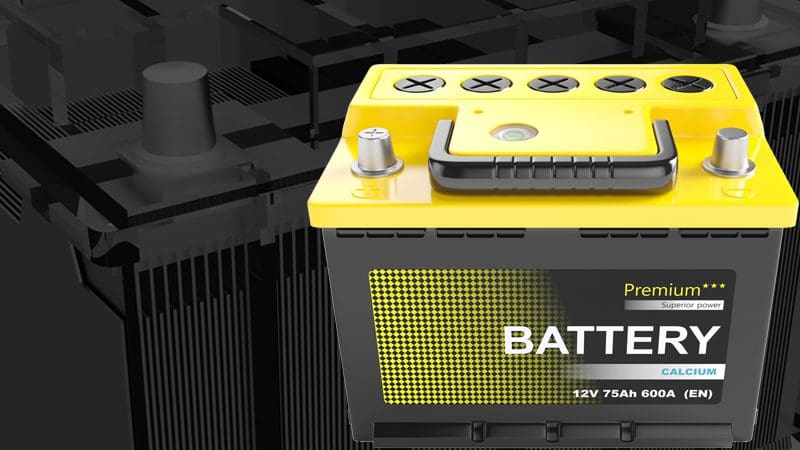
The fuse at the battery is there to protect the vehicle in the event of a short circuit. If it is installed incorrectly, the power wire may rub against a sharp object and wear through the jacket. Once the conductor touches the chassis, a short circuit will occur. Left unprotected, the only limiting factors in how much current passes is the internal resistance of the battery, the resistance of the power wire and the resistance of the connection to the chassis. In most cases, hundreds of amps of current will flow – if we don’t have a fuse on the battery.

Imagine a car with a big stereo system. There may be an upgraded AGM battery under the hood and a few huge amplifiers in the trunk. What if the unthinkable happens – the car is involved in an accident, and the chassis shorts to the power wire? Without a fuse on the power wire connection to the battery, both the wire and the battery will heat up very quickly and could easily start a fire.

Fuses in Our Devices

FusesRecently, we experienced an instance where a radio was blowing the 15 amp fuse in its power harness as soon as it was plugged in. Even with all the speakers disconnected, it kept blowing fuses. It turned out there was an improperly soldered terminal on the internal amplifier in the radio. This poorly soldered connection was shorting the power connection to the chassis of the radio and, subsequently, to the ground. The 15 amp fuse in the harness prevented the copper traces on the circuit board from being destroyed. Our technician was able to clean up the solder connection, and we put the radio back into service.

Types of Fuses in Car Audio

More and more new fuses are introduced to automobiles each year as manufacturers strive to reduce weight and packaging sizes. On the aftermarket side, we use three common fuse styles.

AGC and AGU Fuses

FusesAGC and AGU fuses are constructed from four components: a fusible link, a pair of end caps and a glass tube. The manufacturer solders the fusible link to one end cap, then slides the glass tube over the link before soldering on the other end cap. Many radio harnesses and lower-power devices use AGC fuses. For years, the larger-diameter AGU fuses were very popular in amplifier installation kits.

The problem with these fuses is that the quality and reliability of the internal solder connections can affect their performance. We have seen brand-new fuses out of package not work because the solder connection on one cap was incomplete.

Another consideration for AGC and AGU glass fuses is how we connect them to our power wire. In most cases, a terminal is pressed against the end cap using a sprung metal connection. As this connection heats up, it can loosen. For low-current applications, AGC fuses are acceptable. For moderate- to high-current applications, there are better alternatives.

ATC, ATM and Maxi Fuses

FusesThis style of fuse is composed of two components: a plastic housing and a stamped metal piece that includes the electrical connection tabs and current-limiting link. These fuses are compact and easy to install. They eliminate the connection that plagues the glass fuses, but they still suffer from problems when it comes to connecting them to the power wire. In almost all applications, sprung metal tabs are responsible for pressing the tabs of the fuse against the wire terminals. These can fail over time.

A common point of failure is the loop-type under-hood fuse holder that are included with aftermarket lighting kits. These molded holders include two female terminals connected to the input and output wire. After time and many heat cycles, these terminals can loosen, and the resulting resistance will cause the holder to fail. It should be noted that the current required to heat up the connection to the failing point is often less than what is required to blow a fuse.

ANL and Mini-ANL Fuses

FusesIn the mobile electronics industry, ANL and Mini-ANL fuses are the preferred option when it comes to protecting devices from over-current conditions. These fuses are constructed in the same way as an ATC, ATM or maxi fuse, with a single metal plate that is stamped to provide the connection terminals and the fusible link. A plastic housing snaps over or rivets to the device to enclose the link.

Where these fuses differ from the other two styles is in how they are connected to the wiring. A set of large blocks connects to the wire. Most of these blocks use set screws. The fuse is then attached to these blocks with a large-diameter bolt. Your installer can (and should) tighten the bolt to ensure that the electrical connection is solid and secure.

Protect Your Vehicle and Equipment

Whenever you have your installer adds an electrical device to your vehicle, it must be fused. Even a small-diameter wire for an auxiliary USB charge port, a radar detector or LED lighting can cause an impressive amount of damage when overheated. It will not only melt through its jacket, but will melt the wiring around it. Proper circuit protection is cheap insurance against having to call the insurance company. Your local mobile electronics specialist retailer would be more than happy to discuss how and where they fuse the equipment they install.

This article is written and produced by the team at www.BestCarAudio.com. Reproduction or use of any kind is prohibited without the express written permission of 1sixty8 media.
Filed Under: RESOURCE LIBRARY, ARTICLES, Car Audio, Integration

Product Spotlight: Rockford Fosgate PMX-HD14

BestCarAudio.com - October 26, 2023

Rockford Fosgate PMX-HD14

Rockford Fosgate, a brand synonymous with Harley-Davidson amplifier, speaker and subwoofer upgrades, has just introduced its PMX-HD14 multimedia infotainment system. If you have a 2014 and newer Street Glide or Ultra, or 2015 and newer Road Glide, this might be the perfect way to make your entire stereo system sound better. Best of all, it’s got a unique trick up its sleeve. Let’s check it out.

Rockford Fosgate PMX-HD14
The new Rockford Fosgate PMX-HD14 is the ultimate audio upgrade for your Harley-Davidson touring motorcycle.

Features of the Rockford Fosgate PMX-HD14 Radio

The PMX-HD14 is Rockford Fosgate’s second foray into the multimedia receiver market for Harley-Davidson. The radio is a direct drop-in upgrade for many of H-D’s touring bikes. This plug-and-play design works with the existing power and speaker wiring. It also features a 7-inch touchscreen that works even if the rider is wearing gloves. The screen and the trim around it are Element Ready, the term Rockford Fosgate gives to products that are sealed to keep out water and dust and can handle prolonged UV exposure and all the vibrations from applications like a big V-twin motorcycle.

In terms of the interface, there are four fixed buttons adjacent to the screen for Home, Settings, Information and Power control. A short press on the information button in the top right increases the radio volume, and a short press on the power button below it lowers the volume. Pressing and holding the information button brings up an odometer and distance-since-last-service display.

Rockford Fosgate is on top of the integration situation with the PMX-HD14. The radio is compatible with the factory-installed handlebar audio controls without the need for any additional parts. It works with wireless headsets and the OEM CB system when the WHIM and CB modules are present. And there’s no need to reflash the bike to maximize the radio’s performance. These features make the radio ideal for those who don’t want permanent modifications on their motorcycle.

Harley-Davidson Multimedia Radio Audio Sources

Of course, the PMX-HD14 has an AM/FM and Weather Band receiver, so you can tune in to your favorite local radio stations. An optional SXV300 tuner module will give you access to SiriusXM satellite radio for uninterrupted genre-specific programming from coast to coast. You can also play MP3, WMA or FLAC digital audio files from a USB memory stick. A Bluetooth receiver allows you to play music stored on a portable media player or stream audio from your smartphone.

The PMX-HD14 also includes Apple CarPlay. Connect your Apple iPhone and you can easily access entertainment, communication and navigational information. You can make phone calls or send text messages without taking your eyes off the road. If you’re on a cross-state or cross-country adventure, access to Apple Maps, Google Maps and Waze will help you reach your destination efficiently and safely. Of course, dedicated CarPlay streaming apps like Pandora, IHeartRadio, Pandora or Spotify make listening to almost anything you want quick and easy.

Rockford Fosgate PMX-HD14
Large menu icons and handlebar control integration make the PMX-HD14 intuitive and safe to operate.

Take Your Party on the Road

Rockford Fosgate knows that an essential part of owning a Harley-Davidson motorcycle is the lifestyle and brotherhood with fellow riders. That awareness led them to create a feature called Street Party Mode. If your friends have a PMX-HD14 on their bikes, you can share whatever music you’re playing. They can connect their radios to yours using a proprietary Bluetooth 5.0 solution. The crew can enjoy the same music while cruising or hanging out.

Amazing Audio and Processing Features

The PMX-HD14 includes a built-in amplifier that can deliver 25 watts of clean power to four 4-ohm speakers or 50 watts to four 2-ohm speakers. The radio has six preamp outputs that provide up to 4 volts RMS to your amplifiers. A built-in 14-band graphic equalizer allows you or your installer to fine-tune the sound to your listening preferences. Rockford Fosgate invested a lot of time developing this radio, with innovations like audio presets – called Optimized Tunes – for the different Rockford Fosgate amplifier, speaker and subwoofer upgrade solutions available for your bike.

Rockford Fosgate PMX-HD14
Rockford Fosgate audio upgrade kits’ preset settings ensure maximum performance with minimal configuration time.

Transform Your Motorcycle Adventure with Rockford Fosgate

If high-quality sound, reliability and an easy-to-use interface are on your radio shopping list, drop by a local authorized Rockford Fosgate retailer and check out the Rockford Fosgate PMX-HD14. With a very detailed compatibility list on the product website, you can instantly see whether the radio is suitable for your touring bike. Follow Rockford Fosgate on Facebook and Instagram to keep up with their latest releases. Of course, their YouTube Channel has some of the coolest and most informative videos in the mobile audio industry.

This article is written and produced by the team at www.BestCarAudio.com. Reproduction or use of any kind is prohibited without the express written permission of 1sixty8 media.
14848 Old 41 Rd Suite 9
Naples, FL 34110
(239) 451-3210

Filed Under: RESOURCE LIBRARY, ARTICLES, Car Audio, PRODUCTS Tagged With: Rockford Fosgate

Product Spotlight: Rockford Fosgate PMX-HD14

BestCarAudio.com - October 24, 2023

Rockford Fosgate PMX-HD14

Rockford Fosgate, a brand synonymous with Harley-Davidson amplifier, speaker and subwoofer upgrades, has just introduced its PMX-HD14 multimedia infotainment system. If you have a 2014 and newer Street Glide or Ultra, or 2015 and newer Road Glide, this might be the perfect way to make your entire stereo system sound better. Best of all, it’s got a unique trick up its sleeve. Let’s check it out.

Rockford Fosgate PMX-HD14
The new Rockford Fosgate PMX-HD14 is the ultimate audio upgrade for your Harley-Davidson touring motorcycle.

Features of the Rockford Fosgate PMX-HD14 Radio

The PMX-HD14 is Rockford Fosgate’s second foray into the multimedia receiver market for Harley-Davidson. The radio is a direct drop-in upgrade for many of H-D’s touring bikes. This plug-and-play design works with the existing power and speaker wiring. It also features a 7-inch touchscreen that works even if the rider is wearing gloves. The screen and the trim around it are Element Ready, the term Rockford Fosgate gives to products that are sealed to keep out water and dust and can handle prolonged UV exposure and all the vibrations from applications like a big V-twin motorcycle.

In terms of the interface, there are four fixed buttons adjacent to the screen for Home, Settings, Information and Power control. A short press on the information button in the top right increases the radio volume, and a short press on the power button below it lowers the volume. Pressing and holding the information button brings up an odometer and distance-since-last-service display.

Rockford Fosgate is on top of the integration situation with the PMX-HD14. The radio is compatible with the factory-installed handlebar audio controls without the need for any additional parts. It works with wireless headsets and the OEM CB system when the WHIM and CB modules are present. And there’s no need to reflash the bike to maximize the radio’s performance. These features make the radio ideal for those who don’t want permanent modifications on their motorcycle.

Harley-Davidson Multimedia Radio Audio Sources

Of course, the PMX-HD14 has an AM/FM and Weather Band receiver, so you can tune in to your favorite local radio stations. An optional SXV300 tuner module will give you access to SiriusXM satellite radio for uninterrupted genre-specific programming from coast to coast. You can also play MP3, WMA or FLAC digital audio files from a USB memory stick. A Bluetooth receiver allows you to play music stored on a portable media player or stream audio from your smartphone.

The PMX-HD14 also includes Apple CarPlay. Connect your Apple iPhone and you can easily access entertainment, communication and navigational information. You can make phone calls or send text messages without taking your eyes off the road. If you’re on a cross-state or cross-country adventure, access to Apple Maps, Google Maps and Waze will help you reach your destination efficiently and safely. Of course, dedicated CarPlay streaming apps like Pandora, IHeartRadio, Pandora or Spotify make listening to almost anything you want quick and easy.

Rockford Fosgate PMX-HD14
Large menu icons and handlebar control integration make the PMX-HD14 intuitive and safe to operate.

Take Your Party on the Road

Rockford Fosgate knows that an essential part of owning a Harley-Davidson motorcycle is the lifestyle and brotherhood with fellow riders. That awareness led them to create a feature called Street Party Mode. If your friends have a PMX-HD14 on their bikes, you can share whatever music you’re playing. They can connect their radios to yours using a proprietary Bluetooth 5.0 solution. The crew can enjoy the same music while cruising or hanging out.

Amazing Audio and Processing Features

The PMX-HD14 includes a built-in amplifier that can deliver 25 watts of clean power to four 4-ohm speakers or 50 watts to four 2-ohm speakers. The radio has six preamp outputs that provide up to 4 volts RMS to your amplifiers. A built-in 14-band graphic equalizer allows you or your installer to fine-tune the sound to your listening preferences. Rockford Fosgate invested a lot of time developing this radio, with innovations like audio presets – called Optimized Tunes – for the different Rockford Fosgate amplifier, speaker and subwoofer upgrade solutions available for your bike.

Rockford Fosgate PMX-HD14
Rockford Fosgate audio upgrade kits’ preset settings ensure maximum performance with minimal configuration time.

Transform Your Motorcycle Adventure with Rockford Fosgate

If high-quality sound, reliability and an easy-to-use interface are on your radio shopping list, drop by a local authorized Rockford Fosgate retailer and check out the Rockford Fosgate PMX-HD14. With a very detailed compatibility list on the product website, you can instantly see whether the radio is suitable for your touring bike. Follow Rockford Fosgate on Facebook and Instagram to keep up with their latest releases. Of course, their YouTube Channel has some of the coolest and most informative videos in the mobile audio industry.

This article is written and produced by the team at www.BestCarAudio.com. Reproduction or use of any kind is prohibited without the express written permission of 1sixty8 media.

14848 Old 41 Rd Suite 9
Naples, FL 34110
(239) 451-3210

Filed Under: ARTICLES, Car Audio, PRODUCTS, RESOURCE LIBRARY Tagged With: Rockford Fosgate

Steering Wheel Audio Control Integration

BestCarAudio.com - October 1, 2023

Steering Wheel Audio ControlWhen you go shopping for a new radio for your car, one of the many questions the product specialist should ask you is whether your existing radio has steering wheel-mounted audio controls. Almost every aftermarket radio has provisions to accept a signal that will give you steering wheel audio control functions like volume, source selection, tracking and power. Here’s how it all works.

Factory Control Functionality

Steering Wheel Audio ControlThere are two common types of steering wheel control interfaces. The first is resistive; the second is data. Systems that use resistors often have two wires connected to the switches. Each switch presents a different resistance value when pressed. The factory radio sees these different resistances as different voltages and the computer in the radio responds appropriately. There are usually two wires so a multitude of switches can have well-separated resistance values to ensure functions will never overlap.

A small computer is built into the steering wheel controls switches in vehicles that use data communication for the steering wheel audio controls. This computer has inputs dedicated to each switch and its function. When you press a switch on the steering wheel, the computer sends a digital communication to the computer in the radio. Often, this communication takes place on the vehicle’s CAN data network.

Connection to Aftermarket Radios

Steering Wheel Audio ControlIn North America, almost every radio is Steering Wheel Remote Control Ready. Being “Ready” means the radio has a connection on the back to accept a serial data communication signal. The communication language used on the radio connection is not the same as that used in the vehicle. Thus, you will require an interface module to make everything work. Companies like iDatalink, Axxess and Pacific Accessory Corporation (known in the industry as PAC) all offer interfaces that can be programmed to understand and translate the information from the vehicle to something that is compatible with your radio.

Steering Wheel Audio Control Installation

Steering Wheel Audio ControlWhen your tech is installing the new radio in your vehicle, he has three tasks to complete to make the steering wheel audio controls work. First, he must wire the controls into your vehicle. In many cases, the installer will use a “harness saver” or “wire harness adapter” to connect a set of bare wires to the factory radio plug for power, illumination and speaker wire connections. This adapter usually includes the steering wheel communication wires from the vehicle.

Once the installer completes the electrical connections, the next step is to program the module to understand the commands from the vehicle. Some interfaces have software built into them to recognize commands from the vehicle automatically.

Another method of programming the interfaces uses a website that will allow the installer to select the year, make, model and trim level of the vehicle, and program the interface to recognize the correct commands.

Finally, the interface has to be programmed to send the correct commands to the new radio. Each brand of radio has a set of dedicated and unique command codes.

Additional Options

Steering Wheel Audio ControlOver the past few years, many vehicle owners have chosen to upgrade their factory radios to add Bluetooth audio streaming and hands-free calling to their vehicle. New cars have telephone control buttons on the steering wheel, but older ones don’t. Several of the interface modules have the ability to send different commands to the aftermarket radio, depending on how long you press and hold the steering wheel buttons. For example, a quick tap on the Volume Down button will, of course, turn the volume of the aftermarket radio down. You can have the button programmed so pressing and holding it for a couple of seconds to tell the radio to answer an incoming Bluetooth phone call.

The list of compatible functions varies by vehicle and the make and model of the aftermarket radio.

Custom Applications

Steering Wheel Audio ControlOne unique feature of the steering wheel control interface is that your installer could build a set of custom controls for you. Let’s say you are building a custom car, and you want to add a nice sound system. In most applications like this, the builder will install the aftermarket radio in the glovebox, under the seat or in the trunk of the vehicle. But how can you control the radio if you cannot reach the controls? Your installer could mount a set of switches in the center console and then program the switches, through an interface module to control the aftermarket radio.

Some installers and fabricators have gotten quite creative with these switch installations. A power mirror adjustment switch, for instance, serves as a great solution for volume and tracking functions.

Your Retailer is Ready to Help

When it is time to install a new radio in your vehicle, drop by your local mobile electronics specialist retailer. They would be happy to show you the latest in car audio source units and explain how they can integrate it into your vehicle.

This article is written and produced by the team at www.BestCarAudio.com. Reproduction or use of any kind is prohibited without the express written permission of 1sixty8 media.

Filed Under: RESOURCE LIBRARY, ARTICLES, Car Audio, Integration

Does Preamp Voltage Matter?

BestCarAudio.com - September 3, 2023

Preamp VoltageFor almost as long as there have been car audio enthusiasts, they have been adding amplifiers to their vehicles to increase the power available to drive their speakers. More power means we can turn the volume up higher without distortion. When it came to connecting amplifiers to speakers, the first power boosters connected to the speaker wires of the radio. Now, modern head units offer dedicated RCA preamp outputs to make things easier.

Manufacturers specify how much voltage their source units can produce on these preamp outputs. Most radios offer at least 2 volts of signal, but some offer 4 volt, 5 volt or even 8 volts. Does this preamp voltage matter? Does more voltage make your system louder? Read on to find out.

Signal Chain

Preamp VoltageWhen we install an aftermarket radio in your dash and connect it to the amplifier, we have to make at least one adjustment to ensure everything will work properly. We refer to this step as “setting the gains.” This procedure involves matching the output voltage limit of the source unit with power production capabilities of the amplifier to ensure that both achieve maximum output when the volume is cranked all the way up.

Adjusting an amplifier’s sensitivity is, in theory, a simple process. That said, there are many things to take into consideration. How loud is the source material recorded? Does the head unit distort at full volume? Has anyone adjusted the radio’s tone controls or equalizer? Does the amplifier have any tone controls? If any one of these criteria are overlooked, the sensitivity adjustment may not be accurate.

What is the drawback to an improperly configured sensitivity control? If it is set too low, then you cannot get all the power available from the amplifier to your speakers. If the sensitivity control is set too high, then you can easily distort the output of the amplifier. A second side effect of adjusting the sensitivity control too high is that you increase the noise produced by the amplifier. Nobody wants to hear a hiss in the background of their music, so setting things properly is critical.

What Does High Preamp Voltage Do?

Preamp VoltageSome intensive research among several of us “old” car audio enthusiasts revealed that there were even a few twin-shaft cassette receivers with high-voltage preamp outputs. Some sales and marketing folks decided that more voltage meant more volume. In the early ’90s, several head unit manufacturers started marketing their radios as having voltage preamp outputs. If nothing else changed, sure – in theory, more voltage means more output. That said, if you swap from a 2 V source unit to a 4 V, and then readjust the sensitivity control on your amplifier down to compensate for the extra voltage, the maximum output level should stay the same.

If more voltage does not make your system louder, what is the benefit of this extra voltage? The answer is a reduction in gain of the amplifier and, thus, a reduction in potential noise. If your amplifier is set up to produce full power with a 2 volt signal and has a subsequent signal to noise ratio of 85 dB, then it is not unreasonable to expect that the noise would reduce by about 3 dB when we turn the sensitivity down by the same amount.

To the Test

We set up a premium consumer-grade amplifier on the lab test bench. It had an S/N Ratio specification of 89 dB when producing 1 watt of output and connected to a 4 ohm load. This is a pretty good rating these days. We set the amp up to produce 1 volt of output with a 1 kHz sine wave at a reference level for our function generator at -30 dB relative to full signal. We then took a long frequency response measurement.

The next step was to reduce the output signal of the function generator by an arbitrary amount – we chose 6 dB. We readjusted the sensitivity control of the amplifier so the output level was once again 1 volt and took another long frequency response measurement.

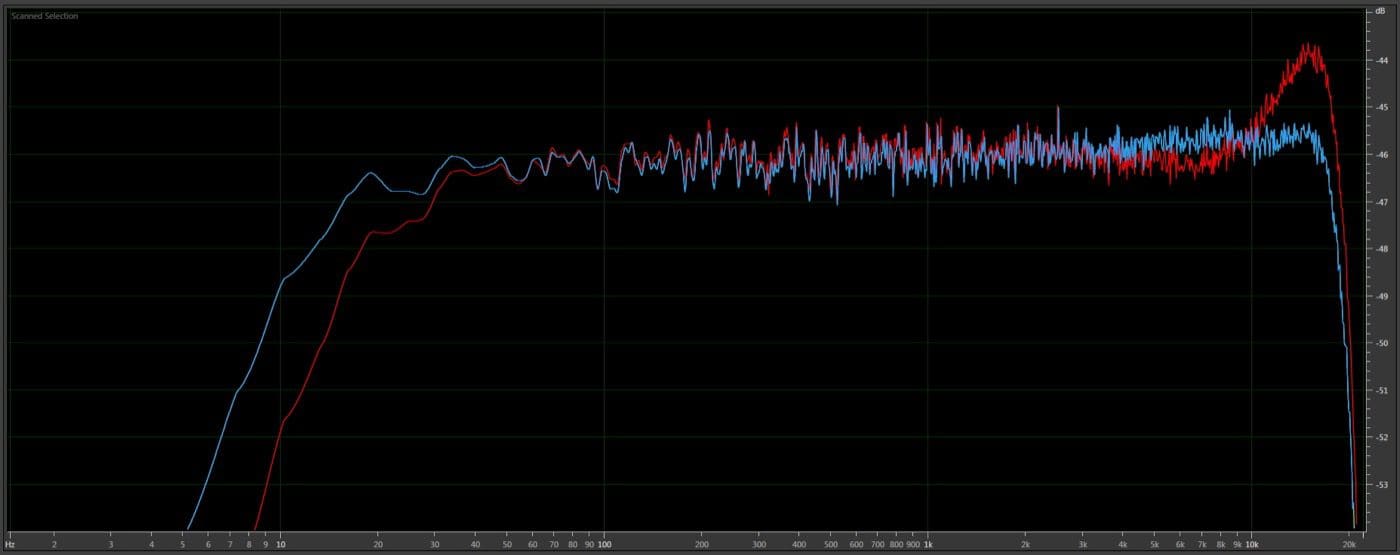
The results of the two measurements are shown in Figure 1.

Preamp Voltage
Figure 1, output dropped by 6db.

In Figure 1, you can see the large spike in frequency at 1 kHz on the right side of the screen. We zoomed in to fill the screen with as much information as possible below this frequency. The gold line shows the background noise produced by the amplifier with the sensitivity control at the lower of the two settings. The green line shows the background noise when we increased the sensitivity of the amplifier by 6 dB.

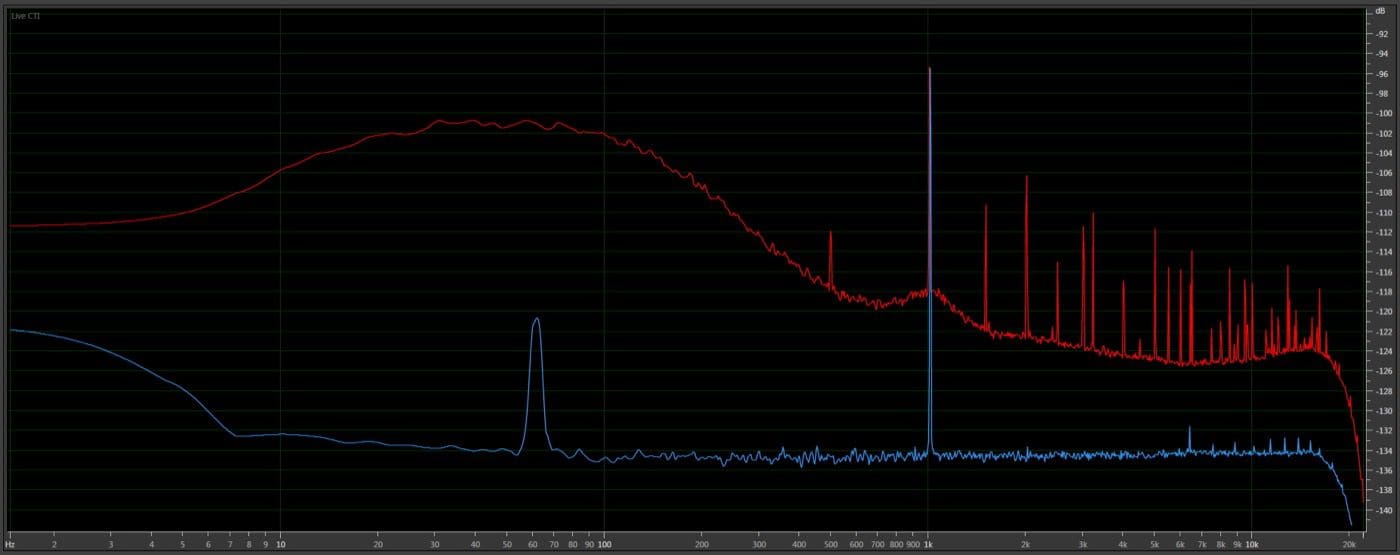
Figure 2 shows the difference in noise level at 100 Hz. Not surprisingly, the difference in noise is just under 6 dB.

Preamp Voltage
Figure 2, just under 6db of noise difference.

Conclusion

When it’s time to go shopping for a new source unit, among the dozens of cool connectivity features, options for display technologies and different brand names, paying attention to specifications is still important. If you are planning to add an amplifier to your mobile electronics system, make sure your source unit can produce at 4 volts of output on the preamps. This extra voltage will allow your installer to reduce both the sensitivity controls on your amplifier and the background noise level of the system.

Visit your local mobile electronics specialist retailer today for more information on which source units have high-voltage preamp outputs.

This article is written and produced by the team at www.BestCarAudio.com. Reproduction or use of any kind is prohibited without the express written permission of 1sixty8 media.
Filed Under: RESOURCE LIBRARY, ARTICLES, Car Audio

  • « Go to Previous Page
  • Page 1
  • Interim pages omitted …
  • Page 8
  • Page 9
  • Page 10
  • Page 11
  • Page 12
  • Interim pages omitted …
  • Page 25
  • Go to Next Page »

Primary Sidebar

About Us

About Us

Devine Concepts is a mobile electronics retailer based in Naples, Florida. We are led by Adam Devine, a 20-year veteran in the industry and a Mobile Electronics Association top 50 … [Read More...]

Take a Tour of Our Facility

virtual tour

We invite you to tour our facility virtually. We hope you love what you see. (It’s even better in person!)

Car Audio

Car Audio

Devine Concepts in Naples, Florida, specializes in car audio. While some shops offer this as one of their services, it is the main focus in our facility. In fact, our owner Adam … [Read More...]

Radar / Laser Detectors

Radar / Laser Detectors

One of the specialties at Devine Concepts in Naples, Florida, is laser and radar detectors. We offer both portable and custom-installed solutions to our clients. It is our opinion … [Read More...]

Custom Installation

Custom Installation

Custom Installation

Devine Concepts in Naples, Florida, was founded in 2018 by Adam Devine, an MECP Master Installer with more than 20 years of experience,  and one of the most-awarded mobile … [Read More...]

Footer

Location


Get Directions to Devine Concepts

Address

Devine Concepts

14848 Old 41 Rd Suite 9
Naples, FL 34110
(239) 451-3210

Services

  • Car Audio
  • Custom Installation
  • Driver Safety
  • Radar / Laser Detectors

Connect with Us

  • Facebook
  • Instagram
  • YouTube

Store Hours

Monday, Tuesday, Wednesday, Thursday, Friday9:00 am – 5:00 pm

Copyright © 2026 Devine Concepts · Privacy Policy · Website by 1sixty8 media, inc. · Log in